
What to Look for When Inspecting a Childcare Centre — A Buyer’s Walk-Through Guide
Most first-time buyers walk through a childcare centre the same way a parent does. Bright rooms, smiling staff, a tidy playground — looks great, must be a good business. That is exactly the wrong way to inspect a centre you are about to spend $1.5–4 million on. A childcare centre inspection for a buyer is part property survey, part operational audit, and part compliance check. The goal is not to like the place. The goal is to find what is broken, what is missing, and what will cost real money after settlement.
This is the walk-through ChildcareLink does with buyers before they make an offer. None of it replaces formal due diligence (see our Due Diligence Checklist for Buying a Childcare Centre) — but a sharp on-site inspection often kills a bad deal before due diligence even starts.
Walk In Like a Buyer, Not a Parent
Before the visit, set the meeting up properly. Ask to inspect outside operating hours where possible — early morning, after pick-up, or weekends if the vendor will allow it. Empty rooms are easier to read. Bring a phone for photos, a torch, a tape measure, and a printed copy of the centre’s last assessment and rating report from ACECQA. Walk the centre with three lenses: the building (what will need money?), the operation (does the layout actually support the licensed numbers?), and the compliance (what would a regulator flag?).
Allow at least ninety minutes. A twenty-minute tour run by an emotional vendor is not an inspection — it is a sales pitch.
Outdoor Space: Where Most Issues Hide
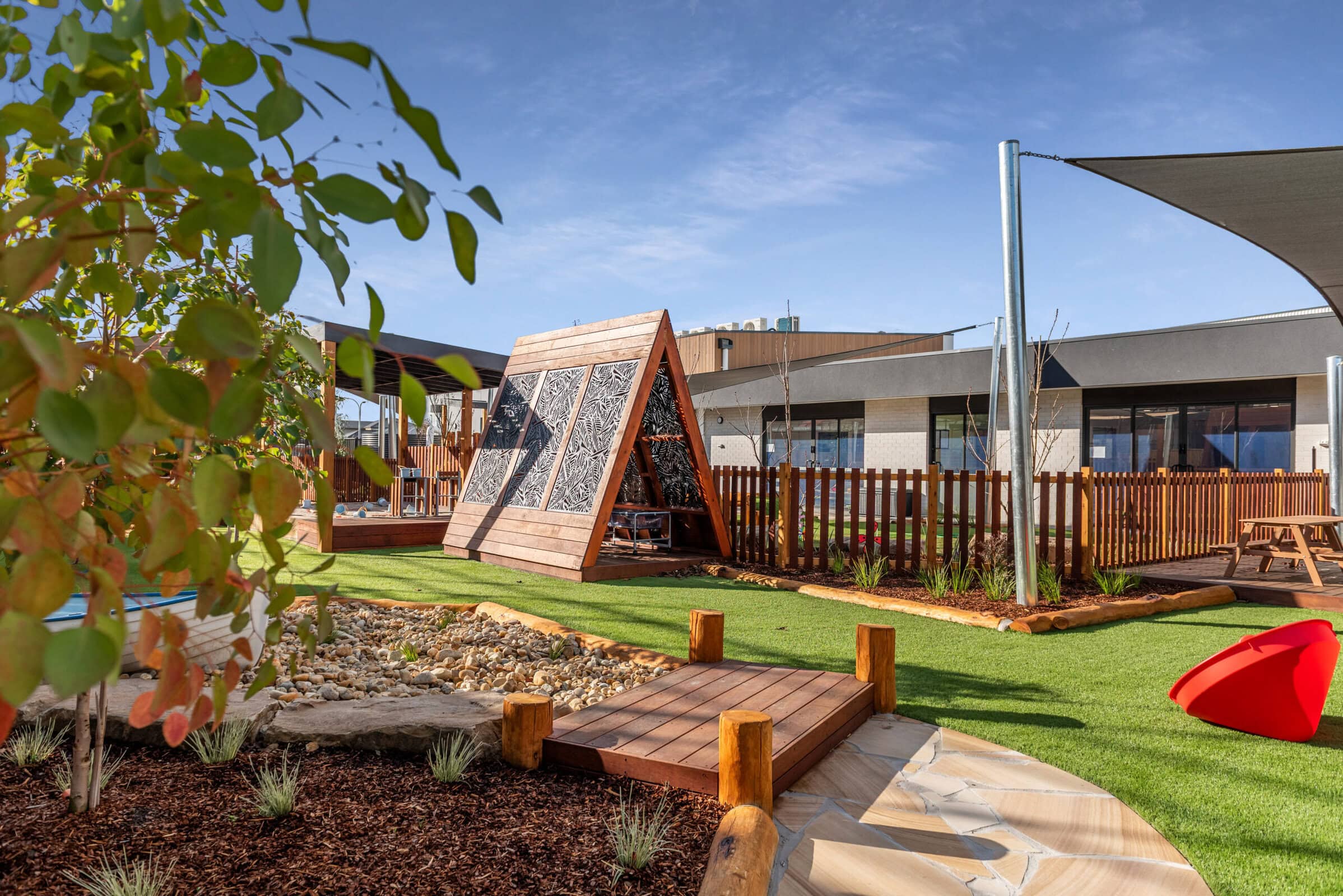
Outdoor space is the single most regulated and most expensive part of a childcare centre. Quality Area 3 of the National Quality Framework requires the physical environment to be safe, suitable, and fit for purpose, and the outdoor space carries the bulk of that risk in practice.
Walk the perimeter first. Fences must be high enough and constructed so that preschool-age children cannot go over, under, or through them — the National Regulations make this clear, and a fence that has been “patched” rather than replaced is a real cost item. Check the fence line for gaps, rust, loose palings, climbable rails, and any gate that does not self-close.
Then look at the surface. Soft-fall under climbing equipment is mandatory and has a real lifespan. Compacted bark, cracked rubber matting, and bald spots under swings all signal a make-good cost coming. Lift a corner of the soft-fall if you can — what is underneath tells you whether drainage works.
Other outdoor items to check on the day:
- Shade structures (sail condition, frame rust, anchor points)
- Sandpit covers and drainage
- Tap fittings, hose reels, and drinking points
- Outdoor storage sheds and what is in them (chemicals stored where they should not be is a flag)
- Trees overhanging the play area — overhanging branches and root lift damage are common and underestimated
- Any path or slope where a pram or evacuation cot would actually be wheeled
If you are buying the freehold as well as the business, this is also where a separate building and pest inspection earns its fee. Termites in soft-fall edging and outdoor decking is something we have seen more than once.
Indoor Rooms and the Layout That Drives Revenue
Inside, the question is no longer “is it cute?” — it is “does the layout match the licence?” A centre licensed for 90 places where the rooms only realistically fit 78 children with the correct ratios is a centre that will never run at full occupancy. That is a revenue problem disguised as an architectural one.
Walk each room with the centre’s licensed numbers in mind. Are the rooms clearly grouped by age (0–2, 2–3, 3–5)? Is there a logical flow from the entry to nursery, then to toddler and pre-kinder rooms? Where do the children sleep, and where do the cots live during waking hours? Are the bathrooms attached to the rooms or down a corridor that staff have to leave the room to access?
Look at the floors and skirtings carefully. Vinyl that is lifting at the edges, carpet in nursery rooms, and tile grout that has gone dark are all maintenance items. Walls that have been repainted in patches usually mean something was leaking. Ceilings tell the same story — sagging panels and water rings are not a “next year” problem.
Storage is the silent killer of small centres. If the corridors are stuffed with prams, art trolleys, and stacked nappy boxes, the centre is short of dedicated storage and that limits how the rooms can be used. Add a storage budget mentally as you walk.
Kitchen, Laundry, Bathrooms
Centres that provide meals (most do, post-Three Day Guarantee) need a commercial-grade kitchen. Stainless benches, a working extraction hood, a grease trap, separate hand basin, and dishwasher rated for commercial use are the basics. Check that the floor finish is impervious and coved at the edges, not just standard tiles.
In the laundry, look for ventilation, dedicated nappy disposal, separation between clean and soiled linen, and a hot water system sized for the centre — not a 50-litre domestic unit. The laundry is also where you find clues about pest activity. Look behind the dryer.
Bathrooms tell you about both compliance and culture. The number of toilets and basins must match the National Regulations for the licensed numbers. Beyond that, are nappy change benches at a safe height with steps, a separate hand basin within reach, and a clear line of sight back into the room? Privacy and supervision are both required and they are in tension — a centre that has solved that tension well usually runs well overall.
Building Services: Roof, Plumbing, Electrical, HVAC
This is where the surprises live. Buyers focus on the playroom and forget that childcare centres are essentially small commercial buildings with elevated water, ventilation, and electrical loads. From the day after settlement, every bill is yours.
On the roof, look for ponding, lifted flashing, and soft spots in metal sheeting. If the centre is in a multi-storey building, ask where the egress route runs — under the National Regulations, the youngest non-ambulatory and toddler-aged children should be located where they can be evacuated most easily, and a centre that has its nursery on the second floor with a single staircase is a problem you will inherit.
Plumbing: turn on every tap, flush every toilet, run the dishwasher and washing machine briefly. Slow drainage, brown water, and “interesting” smells in the laundry trap are real costs. Check the hot water system — capacity, age, and whether it is gas, electric, or heat pump. A failing 200L gas unit on a busy 90-place centre will cost you the day it goes.
Electrical: count power points per room and check whether boards have been added piecemeal. Centres often run multi-boards and extension leads to compensate for under-served rooms — that is both a fire risk and a sign of a renovation that was never completed. Smoke alarms, exit lighting, and the fire panel should all have a current service tag.
HVAC: turn on every air conditioner. A centre running on rooftop split systems that are ten years old and unmaintained is a centre with a $30–60k capex line item that the vendor has not mentioned.
Compliance Signals Visible During Your Visit
Some compliance issues you will only see in the assessment and rating report. Others are visible on the day, and they tell you a lot about how the centre is actually run.
Walk through and note:
- Are the QIP (Quality Improvement Plan) and the most recent assessment and rating certificate displayed?
- Are educator qualifications and first aid certifications posted in a visible location?
- Are sign-in/sign-out registers being used properly, or is the iPad sitting unused on a bench?
- Are policies (medication, child protection, sleep and rest, sun protection) printed and accessible to staff?
- Are nappy change procedures and hand-washing posters in place?
- Are food allergens and individual dietary requirements visible in the kitchen?
- Are sleep checks being recorded?
Centres that take compliance seriously make it visible. Centres that do not, hide the folder. The visibility test is one of the cheapest signals you will get all day.
For a deeper look at the operational items that drive value, our guide on How to Read a Childcare Centre’s Financial Statements walks through the same compliance questions on the financial side.
The “People” Check
You are also buying a team. Walk the rooms while educators are present at least once during the inspection process — vendors usually agree to a second short visit during operating hours after a confidential offer is made. Watch how educators speak to each other and to the children. Watch the centre director — are they present in the rooms or hidden in the office? Watch parent pick-up if you can. A queue of parents who linger and chat with the lead educators is a centre with strong family relationships, which is the asset you are actually paying goodwill for.
ChildcareLink Insight: In most centre inspections we run for buyers, the deal-making detail is rarely a single big issue. It is the cluster — a tired roof, two rooms that under-utilise their licensed capacity, a cook who is leaving, and a director on annual leave the week of settlement. Each one is small. Together they reset the price by 5–10%. The point of a sharp inspection is to find the cluster before you sign the contract, not after. |
Red Flags That Should Make You Pause
Some signals are not negotiation points — they are stop signs. If you see any of the following, slow the deal down and bring in your specialist adviser before you go further:
- Significant water damage anywhere in the building (active or recent)
- Outdoor space that does not actually meet the licensed numbers in usable area
- A “Working Towards” NQF rating with no visible improvement plan
- Educator qualification gaps the centre cannot evidence
- A vendor unwilling to let you see the centre during operating hours at all
- Major capex avoided over the past three years (no roof work, no HVAC service, no playground refresh)
- An owner who cannot answer basic questions about staff retention or occupancy
None of these alone kill a deal — every centre has imperfections. But two or three of them together, paired with a price that assumes the centre is in better shape than it is, almost always means walking away.
Key Takeaway
A childcare centre inspection is not a parent’s tour. It is a buyer’s walk-through that combines a building survey, an operational read, and a compliance scan. Spend the time on the outdoor space, the building services, and the visible compliance signals — that is where the costs and the warning lights live. By the time you leave, you should have a list of items that change either your offer price, your special conditions, or your decision to proceed at all.
After your inspection, the next step is usually a sharper view on what the centre is actually worth based on what you have just seen. Our complete guide to valuing a childcare centre walks through how lease terms, occupancy, and EBITDA combine to set a real price. If you want a rough number to work with before your detailed valuation, our free estimator at childcarelink.com.au/estimator takes about 60 seconds.
Looking at your first childcare centre purchase? Talk to ChildcareLink before you walk through. We will tell you what to look for in that specific centre based on its licence, location, and reported performance. Visit childcarelink.com.au or contact our team directly for a confidential pre-offer review.
Sources
- ACECQA — Quality Area 3: Physical Environment, National Quality Framework
- Education and Care Services National Regulations (outdoor space, fencing, premises maintenance, multi-storey egress provisions)
- StartingBlocks.gov.au — Assessment and Rating Process
- ChildcareLink — internal transaction experience, 2024–2026
Disclaimer: The information provided in this article is for general informational purposes only and does not constitute financial, legal, or professional advice. ChildcareLink recommends seeking independent professional advice tailored to your specific circumstances before making any business or investment decisions.