
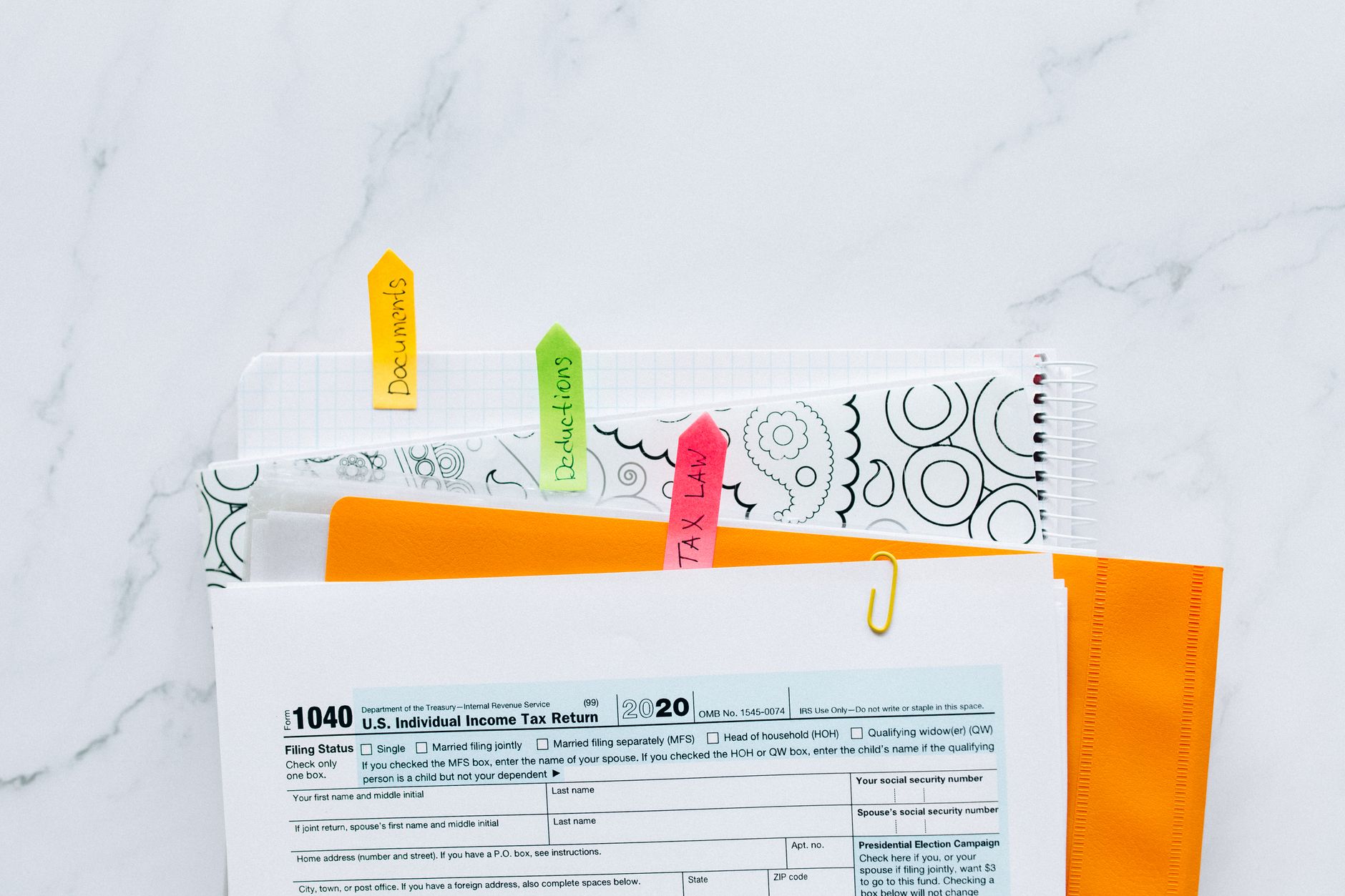
End of Financial Year: Is Your Childcare Centre Sale-Ready?
It is 30 June. The financial year you just closed is the single most important sales document your childcare centre will ever produce — and most owners do not treat it that way. A buyer does not pay for the year you are about to have. They pay for the years you can prove you already had, and the freshest of those proofs has just landed on your desk.
The Australian financial year ends today (business.gov.au), which makes the end of financial year the natural moment to think about your centre as an asset, not just an operation. Whether you might sell in six months or in three years, what you do with the FY26 numbers over the next few weeks shapes the price a future buyer will be willing to defend.
A clean financial year is the asset, not the centre
When a buyer assesses a childcare centre, they are really buying a track record. Across most business sales in Australia, an acquirer and their advisers will work through three to five years of financial statements, tax returns and profit-and-loss records before they commit (general Australian business-sale practice). The completed financial year is the anchor of that pile — the most recent full-cycle proof of how the centre actually trades.
That is why a messy or incomplete year costs real money. Gaps, unexplained one-offs, and inconsistent reporting do not just slow a deal down; they invite the buyer to assume the worst and price for it. Accurate year-end books, by contrast, let you present performance with confidence and keep the valuation conversation on your terms.
ChildcareLink Insight: In our transactions, the centres that command the strongest prices are rarely the ones with the highest revenue — they are the ones whose numbers a buyer can verify in an afternoon. Confidence is a discount-killer. Every question your books answer up front is a question a buyer cannot use to chip the price down. |
What makes FY26 a year worth getting right
The year that just closed is not an ordinary one to have on the record, and that cuts both ways for value.
On the income side, the Child Care Subsidy 3 Day Guarantee took effect in January 2026, removing the activity test for three days of subsidised care per week. For many centres that has supported utilisation across the back half of the year — and utilisation is the number that drives everything else.
On the cost side, FY26 sits inside the Worker Retention Payment period, the grant funding educators’ 15 per cent pay rise, which the government has now extended to June 2028. That matters for how your wage line reads. A buyer wants to understand which parts of your staffing cost are supported by grant funding and how the centre performs underneath it.
The practical point is this: FY26 contains moving parts that a buyer will ask about. If you can explain them clearly — what is recurring, what is one-off, what is grant-funded — you control the narrative. If you cannot, the buyer writes their own, and theirs is always more conservative than yours.
Turn the year-end numbers into a buyer-ready story
Childcare businesses change hands on a multiple of adjusted earnings, and the gap between the headline profit on your P&L and the adjusted figure a buyer actually models can be substantial. We cover exactly which add-backs childcare buyers look for in our guide to EBITDA adjustments, and how the whole valuation is built in our complete guide to valuing a childcare centre — there is no need to repeat that detail here.
What end of financial year adds is timing. This is the window to make sure the year’s records will survive scrutiny:
- Reconcile and finalise, don’t just close. A buyer’s accountant will test your reported earnings against bank statements, the CCS remittances and the payroll. Loose ends found in due diligence are far more damaging than the same items disclosed by you first.
- Document the one-offs while they are fresh. A roof repair, a one-time recruitment campaign, a director’s car — each is a legitimate add-back only if you can evidence it. June is when you remember why; eighteen months from now, you will not.
- Separate the owner from the centre. Above-market or below-market owner salaries, rent paid to a related entity, and personal expenses run through the business all need to be visible and explained. Buyers normalise these; help them do it accurately.
If you want a clean read on how all of this translates into a number before you spend a dollar on advisers, the ChildcareLink Estimator gives you a fast, private starting point off your own figures.
Whether you are buying or selling this year
If you are selling, EOFY is the cleanest planning marker on the calendar. The best outcomes come from owners who prepare their financials well ahead of going to market — industry guidance commonly points to a 12-to-24-month runway to stabilise reporting and demonstrate a consistent margin (general business-sale practice). A strong FY26 result is your headline; a soft one is a signal to fix the operational drivers and let another clean year do the talking. Either way, start from our guides to preparing a centre for sale and the full sale process.
If you are buying, the freshly closed year is your sharpest diligence tool. Read the FY26 statements alongside the prior years and look for the trend, not the snapshot — and know how to interpret what you are seeing, which is the whole point of our guide to reading a centre’s financial statements. Standard due diligence on a business sale runs roughly 60 to 120 days, and that timeline is generally lengthening as buyers grow more selective, so a vendor whose year-end books are already tidy is doing you a favour — and signalling a smoother deal.
The market backdrop makes the effort worth it
This is not academic housekeeping. Childcare property had a record year in 2025, with investment reaching about $1.44 billion before easing to roughly $188 million in the opening quarter of 2026, according to Ray White Commercial. The median transaction yield has sat near 5 per cent, though the gap between prime and secondary assets has widened — well-located metro centres are still keenly sought, while weaker locations trade softer. CBRE Research put cap rates across the sector in a 4.00 to 6.00 per cent band in its March 2026 report.
In a two-tier market, the quality of your story is what moves you up a tier. The centre that presents a clean, well-explained financial year reads as a prime asset. The one that cannot reads as a project — and gets priced like one.
Key Takeaway
The financial year that closed today is the proof a buyer pays for, so treat FY26 as a document, not just a deadline. Reconcile it properly, evidence the one-offs, and make the grant-funded and owner-related lines easy to read. Do that now, while the detail is fresh, and you protect your value whether you sell this year or in three.
Wondering what your freshly closed year actually makes your centre worth? Talk to ChildcareLink for a confidential appraisal — or pressure-test the number yourself with our Estimator. Visit childcarelink.com.au or contact our team directly.
Sources
- Ray White Commercial / Commo — childcare investment ~$1.44bn in 2025 (record), ~$188m in Q1 2026, median transaction yield ~5%, widening prime/secondary spread, June 2026
- CBRE Research — “Child Care Centres: Intelligent Investment” (cap rates 4.00%–6.00%; 2025 a banner transaction year), March 2026
- business.gov.au — End of financial year checklist (30 June EOFY; record-keeping obligations), 2026
- General Australian business-sale practice (Bentleys, Morgan & Westfield, Xero) — buyers review 3–5 years of financials; due-diligence period typically 60–120 days; prepare financials 12–24 months before sale
- ChildcareLink transaction experience
Disclaimer: The information provided in this article is for general informational purposes only and does not constitute financial, legal, or professional advice. ChildcareLink recommends seeking independent professional advice tailored to your specific circumstances before making any business or investment decisions.