Turn-Key Childcare Franchise: What Does It Actually Mean?
“Turn-key” is one of the most reassuring words in franchising and one of the least precise. The picture it paints is simple: hand over the money, turn the key, and walk into a finished childcare business that is already running. The reality is more useful to understand than the slogan, because a turn-key childcare franchise delivers a finished building — not a finished business. Knowing the difference is what stops a buyer overpaying for the gap between the two.
If you are still weighing whether to franchise at all, start with our pillar guide on franchise versus independent childcare centres. If you have decided to franchise and are comparing brands and fee structures, our guide to choosing the right childcare franchise covers that. This article zooms in on one phrase you will see in almost every childcare franchise prospectus — “turn-key” — and explains what it genuinely includes, what it quietly leaves to you, and how the structure shapes what you can eventually sell.
What “Turn-Key” Actually Promises
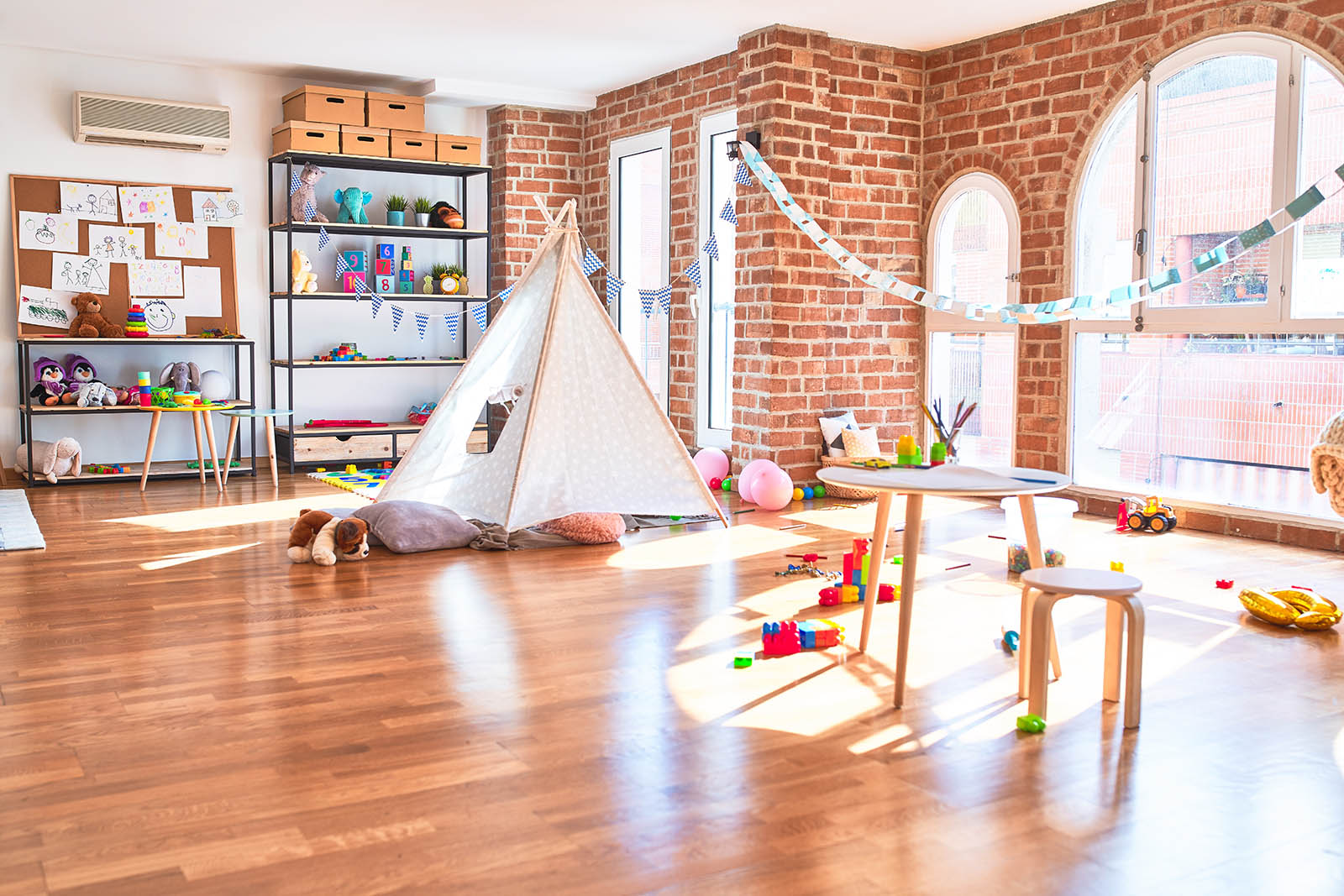
In the childcare context, a turn-key offer is a delivery model. The franchisor takes on the work of getting a centre from empty site to opening day, so the franchisee does not have to project-manage a development. Based on how the larger Australian groups describe their offer, that delivery package typically covers securing and negotiating the premises lease, working alongside developers and builders on the building works and fit-out, assisting with the regulatory approvals, helping recruit qualified educators, and training the franchisee — Kool Kidz, for example, describes training of roughly two to three weeks before you begin operating. The centre is fitted out with the resources, furniture, and equipment needed to run, and handed over ready to accept children.
That is a genuine value proposition. Developing a childcare centre from scratch is slow and technical work — traditional builds are running around 14 to 18 months, with modular delivery faster at roughly five to seven months, according to 2026 construction benchmarks from EcoPrestige. A first-time operator who tried to do all of that alone — site, council, builder, fit-out, approvals, recruitment — would be exposed at every step. Turn-key compresses that into a managed process with a brand standing behind it. You are paying for the removal of development risk and for a centre that opens on brand from day one.
What Turn-Key Doesn’t Buy You
Here is the part the brochure tends to underplay. A turn-key childcare centre opens with a finished room and zero children in it. Occupancy is not delivered with the keys — it is built month by month after you open, and the ramp from opening day to mature, profitable occupancy commonly takes 18 months to three years depending on the catchment, the competition, and how well you market. The “turn-key” promise covers the asset. It does not cover the trading performance, because there is no trading history yet.
This matters because it changes what you are actually buying. When you buy an established childcare business, you are buying a proven earnings stream and you can verify it. When you buy a turn-key franchise, you are buying a delivery process plus a start-up — a brand-new business that still has to earn its occupancy. Both can be good investments. They are not the same investment, and they should not be priced the same way in your head.
ChildcareLink Insight: We often see buyers compare the all-in price of a turn-key franchise against the sale price of an established, fully-occupied centre and conclude the turn-key option is “cheaper.” It usually isn’t, once you add the 18-to-36 months of ramp-up — the period where you are paying full rent, full staff, and full fees while occupancy is still climbing. Budget the ramp, not just the build. |
The Real Cost Stack
The single most common mistake is treating the franchise fee as “the cost.” Industry guidance from sources such as Sprintlaw is blunt on this: the franchise fee is rarely the biggest number once you add fit-out, equipment, and working capital, and for any premises-based business the fit-out and equipment are often the largest single line. A turn-key childcare franchise bundles most of this into one headline figure, which is convenient — but you should still understand what sits inside it.
The published all-in numbers vary widely by brand and centre size. Kool Kidz quotes an all-inclusive price to own a service of roughly $2 million to $2.5 million; MindChamps Early Learning franchises have been listed in the region of $700,000 to $850,000. As a sense-check on the build component, national construction benchmarks sit around $30,000 to $35,000 per licensed place (EcoPrestige, 2026), so a centre’s place count gives you a rough feel for whether the fit-out figure inside a quote is in the right zip code. The rest of the stack — working capital to fund the ramp-up, lease incentives and outgoings, and the franchise and marketing fees we cover in our choosing-a-franchise guide — is yours to plan for. Because most of these costs are funded up front against a business with no earnings yet, financing structure matters; our guide to financing a childcare centre purchase walks through the options.
The discipline we recommend is to model the exit, not just the entry. Work out what the centre will realistically be worth once it trades at mature occupancy, and compare that figure to your total all-in cost plus the cost of carrying it through ramp-up. If the mature value comfortably clears the all-in entry cost, the turn-key route is doing its job; if it doesn’t, you are paying a premium for convenience. You can pressure-test that mature-value number using our free childcare centre value estimator and our full valuation guide.
What Turn-Key Means for Your Exit
A turn-key entry is also an eventual exit, and the structure you sign into decides how clean that exit will be. Two questions do most of the work. First, who holds the lease and the regulatory approvals — you, or the franchisor? If the brand controls the premises lease and the Service Approval, the “business” you built is far harder to sell as your own asset, because a buyer cannot simply take it to the open market. Second, what do the transfer terms allow — can you sell to any qualified buyer, or only to one the franchisor approves, and on what terms? These clauses live in the franchise agreement, and we break them down clause by clause in what a childcare franchise agreement includes. They are worth reading before you sign a turn-key deal, not after, because they set the ceiling on your resale value.
It is also worth being clear that a turn-key franchise and a purpose-built or converted independent centre are two routes to the same destination — a trading childcare business. The turn-key franchise trades some control and some margin for a managed delivery and a known brand. The independent route keeps the control and the upside but puts the development risk on you. Neither is “right.” The right choice depends on how much risk you want to carry and how much of your eventual sale price you are willing to share with a franchisor.
ChildcareLink Insight: The cleanest turn-key deals we see are the ones where the franchisee holds the lease and the approvals and retains a genuine right to transfer. That structure means you have built a sellable asset, not just a managed job. The least clean are the ones where, years later, the owner discovers the only permitted buyer is the franchisor — at the franchisor’s price. |
Key Takeaway
A turn-key childcare franchise delivers a finished, fitted-out, ready-to-open centre and takes the development risk off your plate — that is real, and for many first-time operators it is worth paying for. What it does not deliver is occupancy, trading history, or a guaranteed exit; those you still earn and structure yourself. Price the ramp-up, not just the build, model the mature value against your all-in cost, and read the lease, approval, and transfer terms before you turn any key. Get independent legal and financial advice on the agreement, because the structure you sign into is the asset you will one day sell.
Considering a turn-key childcare franchise, or want a second opinion on whether the all-in price stacks up against the centre’s likely mature value? Talk to ChildcareLink for a specialist, confidential read. Visit childcarelink.com.au or contact our team directly.
Sources
- Kool Kidz Childcare — franchise opportunity pages (what a turn-key offer delivers; ~2–3 weeks training; all-inclusive price ~$2m–$2.5m), 2025–2026
- MindChamps Early Learning — franchise investment listing (~$700,000–$850,000), 2025–2026
- EcoPrestige — Modular Childcare Cost Per Place, Australia 2026 (build benchmark ~$30,000–$35,000 per place; traditional ~14–18 months vs modular ~5–7 months), 2026
- Sprintlaw — How to Start a Childcare Business 2026 and True Franchise Costs (franchise fee rarely the largest cost; fit-out, equipment and working capital), 2026
Disclaimer: The information provided in this article is for general informational purposes only and does not constitute financial, legal, or professional advice. ChildcareLink recommends seeking independent professional advice tailored to your specific circumstances before making any business or investment decisions.